

Search Everywhere Optimization: How Brands Stay Visible Everywhere People Search

Think about the last time you researched something online.
You probably started with Google. Then, maybe watched a YouTube video. Checked Reddit to see what real people said. Scrolled TikTok for a quick demo. Maybe even asked an AI tool to summarize the options.
Only after all that did you start looking at company websites.
This is how modern discovery works, and it’s why Search Everywhere Optimization (SEvO) matters.
What Is Search Everywhere Optimization?
Search Everywhere Optimization (SEvO), by its name alone, is pretty self-explanatory.
Search Everywhere Optimization (SEvO) is a strategy to help brands remain visible across platforms people use for research. This includes search engines, AI assistants, social platforms, video platforms, and online communities.
I recently discussed that foundational SEO plays a crucial role in online visibility. A well-structured website, clear content, and strong technical signals are essential starting points for online visibility.
SEvO builds on this strong foundation; it acknowledges consumer patterns and understands how people gather information from various platforms.
Since research occurs in many different places, businesses cannot rely solely on search rankings for visibility.
Businesses need to establish a presence where people ask questions, share experiences, and compare solutions.
SEvO addresses this change in research behavior by helping brands maintain a consistent presence across the multiple platforms people use to gather information and evaluate their choices.
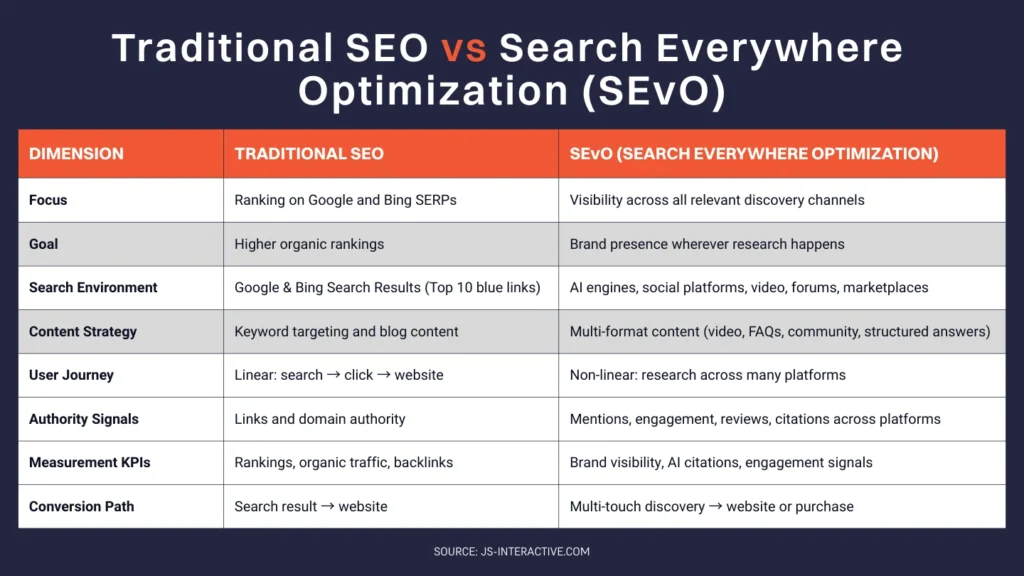
What Is the Focal Shift Behind SEvO?
Rather than relying on a single search engine results page (SERP), SEvO focuses on ensuring people encounter consistent, helpful signals about a brand wherever they research. Across search engines, social platforms, videos, communities, and AI tools, throughout their entire decision journey.
Building this kind of visibility starts with understanding what people are searching for and the intent behind those questions.
Audience and Intent First
Understanding what questions your target audience asks long before they begin researching a problem remains essential for any online strategy.
Before contacting your company, buyers often spend time learning about their options, comparing solutions, and reading about other people’s experiences. Not just with your brand, but with others as well.
Rather than focusing on a single keyword or page, SEvO looks at clusters of related questions that reflect how people naturally research a topic. These clusters often include explanations, comparisons, troubleshooting questions, and real-world experiences.
If your content addresses your audience’s concerns clearly and directly across multiple platforms, you are more likely to be cited and made visible online.
Deeply understanding your customers provides an opportunity to create a variety of resources and media types that answer questions wherever your audience’s research begins.
Strong Entity Foundations
SEvO relies on clearly defined entities, which are identifiable aspects connected to your business, including your brand, services, products, leadership, and areas of expertise.
Search engines and AI systems rely on these signals to understand who you are and what your business is best known for. When these details are clearly structured on your website, it becomes easier for platforms to connect your brand to the topics people are researching.
These important business details must appear consistently across platforms, as this helps search engines and AI systems connect those signals back to your brand.
Here are a few examples of business details AI systems care about:
- Your business name
- Services and products you offer
- Business locations and contact details
- Brand descriptions and messaging
Clear and consistent information helps search systems understand who you are, what you offer, and when your business should appear in relevant searches.
Platform-Specific Content
People have various expectations depending on the platform they use. And SEvO acknowledges this. The information users look for on YouTube or TikTok often differs from what they search for on Google or LinkedIn.
Each platform has its own format, expectations, and signals that influence what content appears in search results.
Examples of platform-specific content include:
- Short videos often perform well on TikTok, Instagram, and YouTube Shorts
- Educational or explanatory videos tend to perform well on YouTube
- Professional commentary and expertise often gain traction on LinkedIn
- Reviews, Q&A sections, and product attributes influence search in online marketplaces
Content performs best when it matches searchers’ intent with each platform.
Visibility in AI Answer Systems
AI answer systems rely on structured, clearly written information when generating responses to user questions. If you present your content with direct information and clearly organized ideas, it is easier for AI systems to interpret and reference.
A few practices to structure content that improves AI visibility include:
- Use headings that reflect common questions
- Provide concise answers within your content
- Include FAQ sections that mirror natural language queries
- Support key statements with credible data or sources
Well-organized, easy-to-interpret content is more likely to be referenced by AI systems when generating answers.
Local and Voice Search Visibility
Location-based or voice queries continue to grow. Many searches occur on mobile devices while someone is actively looking for a nearby business, product, or service.
Instead of typing short keywords, people often ask full questions such as “Where can I find a coworking space near me?” or “What coffee shops are open right now?”
Content that reflects these natural language queries is easier for search systems and voice assistants to interpret.
A few practices to support visibility in local and voice searches include:
- Location-based pages that clearly describe your location details or service areas
- Natural conversational questions people might ask when searching locally
- Clear business hours and contact information that platforms can reference
These signals help connect your business to local searches when people are looking for nearby options.
5 Steps to Build a Search Everywhere Optimization Strategy
While SEvO can feel broad at first, the process usually begins with a few practical areas of focus.
Here are five steps to consider:
1. Audit Where Your Brand Already Appears
Where does your business already appear across the web?
Most businesses show up in more places than they realize. Search engines, social platforms, video sites, review platforms, and online communities may already reference your brand, services, or content.
Start by reviewing the platforms people commonly use to research information. Look for existing profiles, mentions, videos, articles, listings, and discussions connected to your business.
This audit helps answer a few important questions:
- Where does your brand already appear?
- Which platforms drive the most visibility or engagement?
- Where are competitors showing up that your business is not?
Understanding your current footprint makes it easier to identify gaps and prioritize your SEvO efforts.
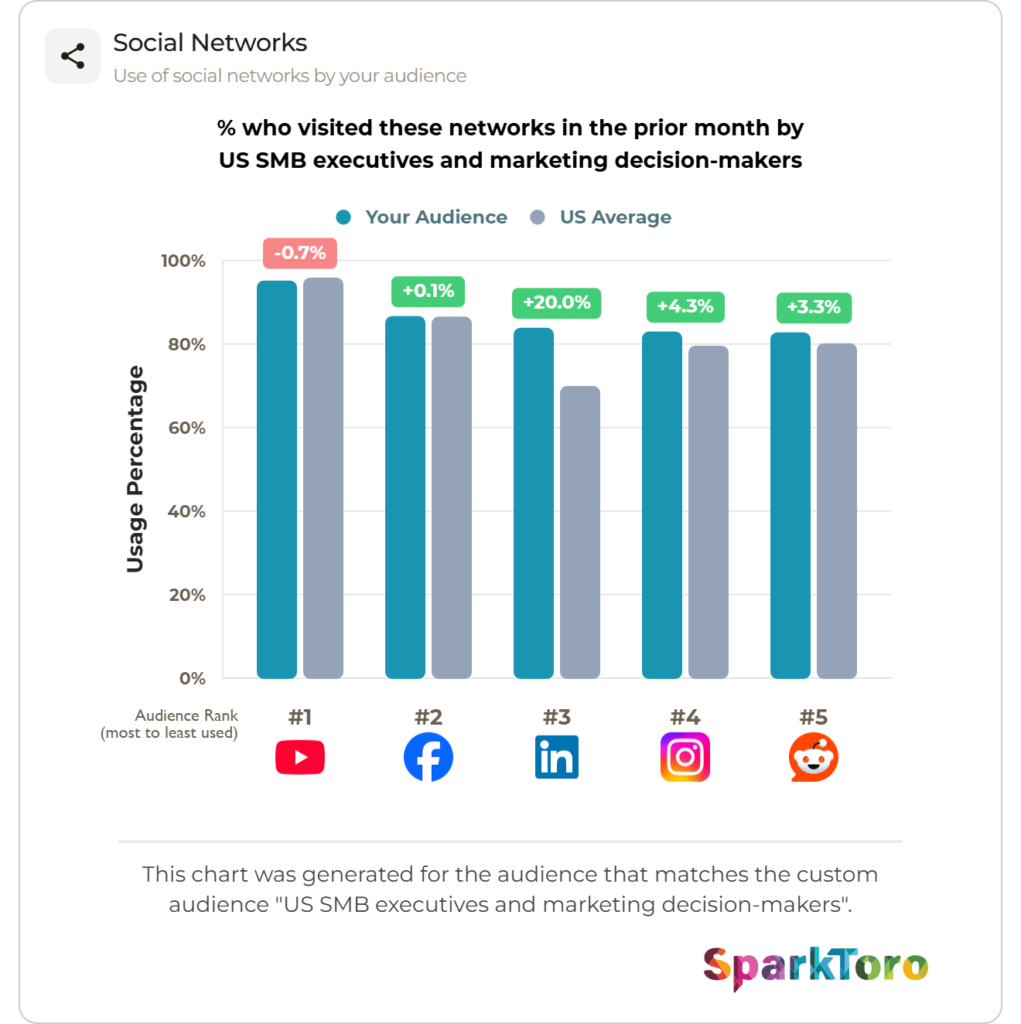
2. Identify Where Your Audience Searches
Once you understand where your brand already appears, your second step is identifying where your audience searches for information.
Different audiences rely on different platforms during the research process. Audience behavior often reveals where research actually happens and which platforms influence decisions.
Looking at analytics, referral sources, customer feedback, or using tools like SparkToro to reveal insights about your audience and what influences research and decision-making.
Pay attention to patterns such as:
- Platforms that consistently drive traffic to your website
- Channels where your audience engages with content.
- Places where competitors appear frequently in discussions or recommendations
Understanding where your audience spends time researching helps focus SEvO efforts on the platforms most likely to influence discovery.
3. Define Your Core Topics and Questions
Once you have a more detailed understanding of where your audience searches, your third step is identifying the topics and questions that drive their research.
Most searches now explore a topic through multiple related questions to understand a problem, compare options, and evaluate possible solutions.
- What is it and how does it work?
- What are the available options?
- How does one option compare to another?
- What problems or limitations should I know about?
SEvO organizes these questions into clear topic areas rather than treating each search as an isolated query. Mapping these questions helps identify the content needed to support the entire research process and ensures your brand appears when people explore those topics.
4. Adapt Content for Each Platform
Once core topics and questions are defined, your fourth step is creating content for the platforms where your audience researches information.
Different platforms favor different formats. A detailed explanation may work well as an article, while the same topic might perform better as a short video, a discussion post, or a visual summary on another platform.
Repurposing core content into multiple formats helps extend its reach across these environments.
Examples of content repurposing for multiple channels might include:
- Turning an article into a short educational video
- Sharing key takeaways from research as a LinkedIn post
- Creating short clips or visual summaries for social platforms
- Building FAQ sections that reflect common questions people ask
Adapting content in this way helps the same ideas surface across multiple discovery channels.
5. Track Visibility Across Platforms
How does your brand appear in search results, videos, social posts, discussions, reviews, or AI-generated answers?
Monitoring where your brand appears and how people interact with your content across different platforms is an essential part of your strategy.
Tracking these signals helps reveal which platforms influence discovery and engagement.
Monitoring your brand visibility can include:
- Traffic coming from different media and social platforms
- Engagement with content across various channels
- Mentions or references to your brand online
- Growth in branded searches or direct visits
Reviewing these signals over time helps identify which platforms contribute most to visibility and where additional SEvO efforts may be needed.
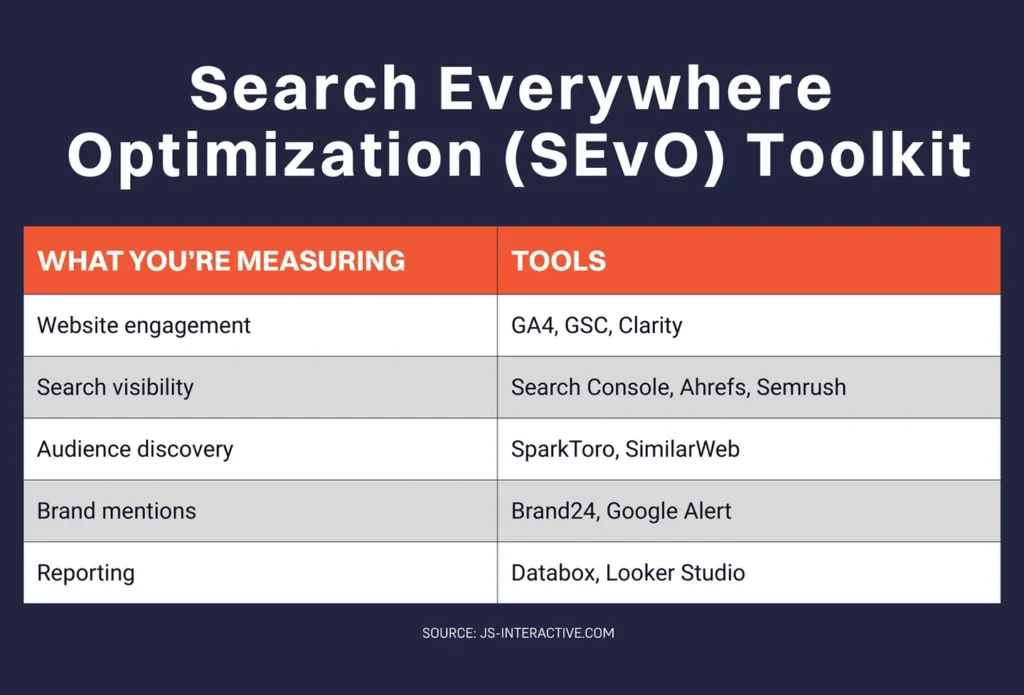
Here are a few tools from our own tech stack to support your SEvO campaign:
- Core Website & Conversion Analytics: Google Analytics, Google Search Console, and Microsoft Clarity track traffic sources, engagement, conversions, and user experience friction points.
- Search & AI Visibility Tools: Semrush, Ahrefs, and Ziptie.dev tracks keyword visibility, share of voice, content gaps, brand mentions, and visibility
- Audience & Discovery Intelligence: SparkToro, SimilarWeb, and BuzzSumo help discover traffic sources, content engagement, and platforms audiences follow
- Brand Monitoring & Mentions: Brand24, Google Alerts tracks mentions across blogs, social media, and communities
- Reporting & Attribution: Databox, Looker Studio to combine data from multiple sources with custom dashboards.
Build Your SEvO Strategy With JS Interactive
Search visibility now extends beyond traditional search engines. People research across videos, social platforms, online communities, review sites, and AI-generated answers before choosing who to trust.
SEvO focuses on building consistent visibility across the platforms people use during that research process.
At JS Interactive, we help businesses strengthen their search foundation while expanding their presence across modern discovery platforms.
Contact JS Interactive today to evaluate your current search presence and build a practical SEvO strategy.

Share Article


