

10 Content Marketing Tactics that Make You Cringe
Does your LinkedIn inbox look like this?
“Hey! I just saw your profile and thought it would be a great fit for our turn-key system that guarantees 10X leads and revenue.”
We’ve all seen it. The cold pitch. The bloated promise. The cringe.
And while it’s easy to laugh, this kind of content shows up everywhere: in blogs, landing pages, and even brand campaigns that should know better.
Cringeworthy content isn’t just annoying. It can actually hurt. It kills trust, drives people away, and leaves your audience rolling their eyes.
So we pulled together the worst offenders. Backed by data and rooted in real audience behavior, these are the content marketing tactics that should’ve been left behind in 2015.
10 Cringeworthy Content Marketing Tactics
These aren’t just bad habits. They’re the digital equivalent of showing up to a client meeting in a novelty tie. Loud, off-putting, and impossible to take seriously. Let’s break down the tactics that make marketers cringe and audiences click away.
1. Clickbait Headlines That Don’t Deliver
We’ve all seen them: “You Won’t Believe What Happened Next,” or “This One Trick Will Change Everything!”
Then we click. And the content flops.
Clickbait headlines might get attention, but they also raise red flags.
When people feel misled, they don’t just bounce; they begin to distrust the source. Unfortunately, roughly 58% of people say misinformation is still a major concern in the content they see online. And clickbait, by design, blurs the line between curiosity and manipulation.
Globally, around 30% of mainstream headlines now qualify as clickbait, making it harder for credible content to stand out.
If your headline promises something bold, make sure the content delivers on that promise. Otherwise, you’re not building interest, you’re turning people off.
2. Me-First, Brand-Centric Content
You’ve seen it. Every blog post is a product pitch. Every LinkedIn update links back to a sales page. It’s content, technically. But it reads like an ad.
Sometimes it even pretends to be about you: “I saw your profile and thought you’d be a great fit.”
Our friend, Jon Rector, sent a timely text that served as the perfect example…
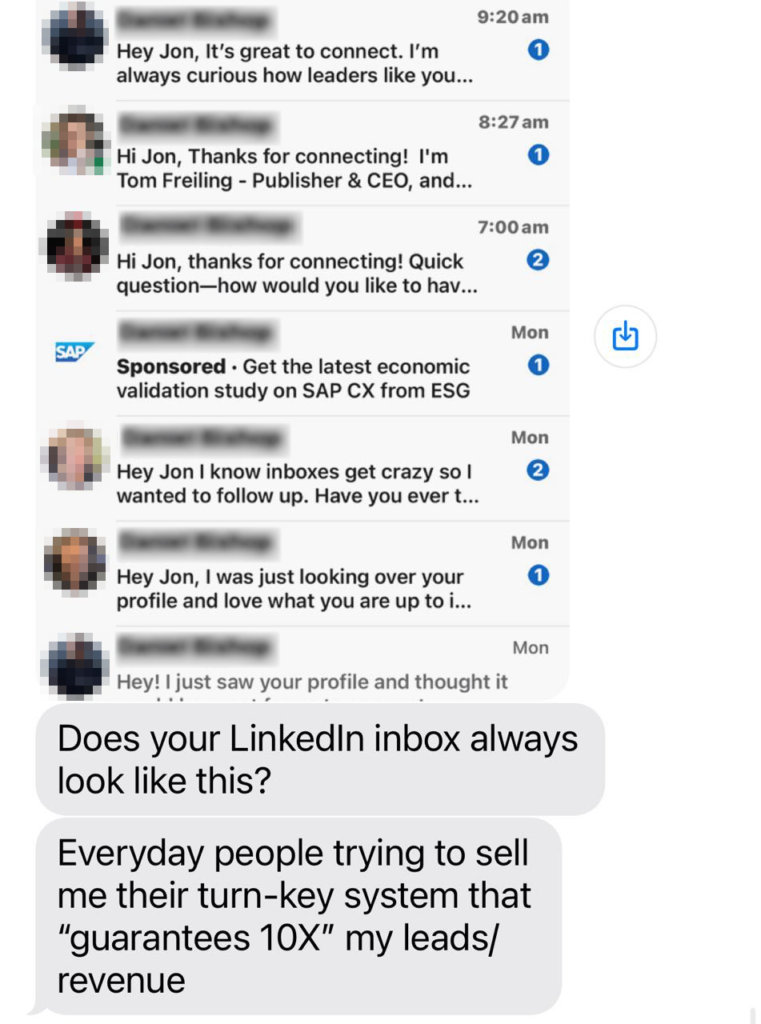
These messages are not about you. It’s about selling something fast, without putting in the work to earn trust.
Today’s buyers don’t want to be sold to. They want answers, perspective, and help. That’s why up to two-thirds of people say they prefer educational content over sales-driven messaging, and 87% of B2B marketers say they focus on audience needs first when creating content.
If your content is always about your brand, don’t be surprised when no one listens. The brands that win attention are the ones that solve problems, share what they’ve learned, and make space for the reader.
Talk about your expertise. Not just your offering.
3. Fear-Based Messaging
“If you don’t act now, your business could be left behind.”
“Your competitors already know something you don’t.”
Fear-based marketing tries to spark urgency by triggering anxiety. But it rarely works the way it’s intended. Instead of action, it often creates avoidance and leaves a bad impression.
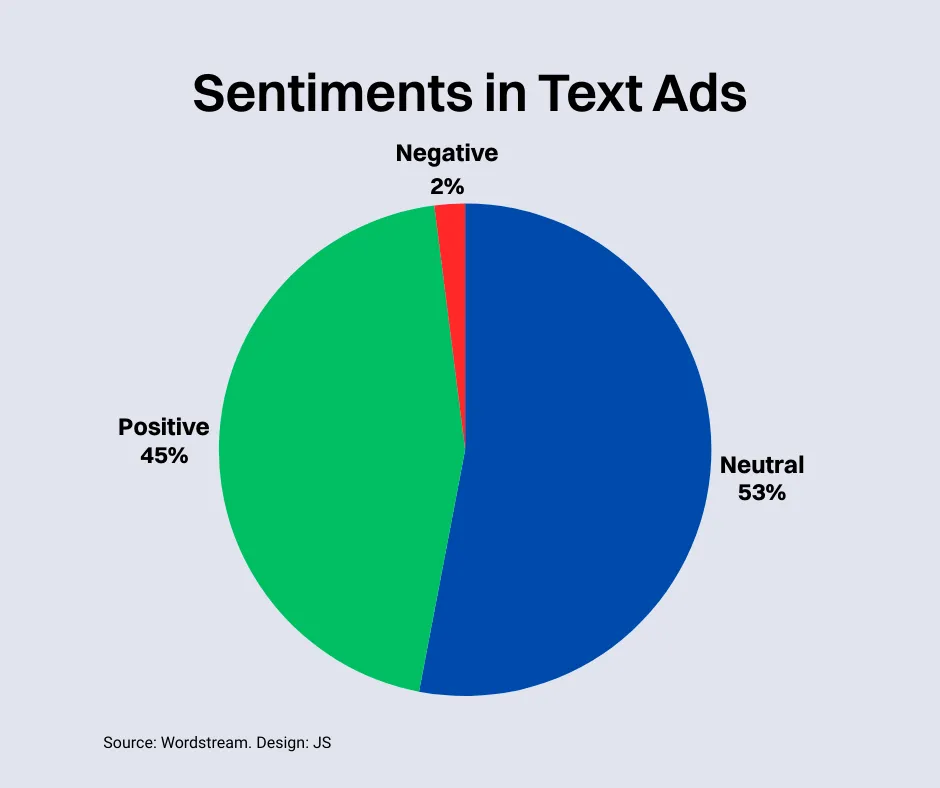
This tactic has become so tired that it’s nearly extinct. In fact, only around 2% of digital text ads today rely on negative or fear-driven messaging.
Lately, we’ve seen this tactic repackaged through the lens of AI:
“AI is replacing marketers.”
“If you’re not using automation, you’re already behind.”
Whether it’s painting a doomsday scenario or selling a fantasy, it’s the same playbook, and readers are getting wise to it.
People want to be informed, not threatened. Your content shouldn’t scare users into engagement.
4. Fake Urgency and Scarcity
“Buy Now or Miss Out Forever!”
“Cart expires in 9 minutes.”
But somehow, it’s always 2 left. The timer always resets. And Black Friday seems to last all year.
Take this from a real purchase I made over a year ago and just saw again today:
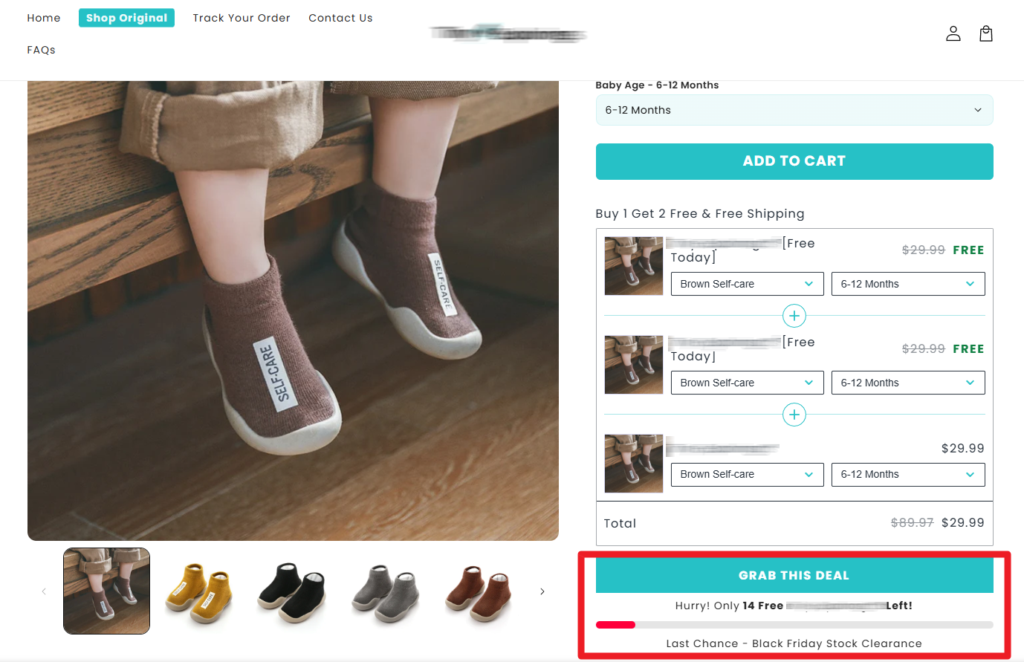
These shoes? Great product. Durable. Adorable. Totally worth the price.
But the message? Still screaming “Only 14 left!” and now it’s tied to a Black Friday stock clearance, even though I saw the exact same message on a random Tuesday well over a year ago when I bought the same bundle for my toddler.
Believe it or not… 52%of shoppers (myself included!) say they’ve made impulse purchases because of FOMO (that “fear of missing out”), and 40% admit they spent more than they intended. These tactics do drive action, but not the kind that builds loyalty.
Urgency works when it’s real. A true promotion. A product that actually sells out.
But fake urgency? It’s the digital version of crying wolf. And eventually, people stop believing you… Even if you’re a great brand.
5. Corporate Jargon and Buzzwords
“Leverage our scalable solutions to unlock seamless growth.”

Nope.
If your readers need a translator to understand your copy, it won’t connect. They’ll tune out and head over to another resource long before they even get to the second sentence…
The numbers speak for themselves: 88% of people prefer marketing content written in plain language.
Even more telling, 73% would schedule a demo after reading plain-language content, compared to just 44% when the language is stuffed with buzzwords.
When it comes to engagement, clarity wins.
The worst part? Corporate-speak doesn’t make your brand sound smart. It makes it sound like every other brand that’s trying too hard.
If your blog post sounds like it was drafted by legal and passed through procurement, it won’t connect with readers.
Your audience wants answers, not buzzword bingo.
Speak like a person. Not a pitch deck.
6. SEO-First Content That Ignores the Reader
Don’t you just love content written for “spiders,” not humans? You know the kind — copy clearly meant for Google bots, packed with awkward phrasing like:
“Best marketing strategy content for digital marketing success strategy tips.”
It’s technically optimized. It’s also unreadable.
This is what happens when SEO becomes the goal instead of the tool. Stuffed with keywords, bloated with headers, and somehow still says absolutely nothing.
Google’s Helpful Content update is now baked into its core algorithm, and its influence is growing. The system is designed to identify content that’s created just to attract clicks: pages overloaded with keywords, generic phrasing, and no meaningful value.
And now, with AI-generated posts flooding search results, Google is cracking down even harder on content that feels mass-produced or written without real expertise.
If your content is written to game the algorithm instead of serve the reader, it’s going to get buried.
Readers feel no differently. They can tell when a post was created for traffic rather than substance.
Good SEO still matters. But not at the expense of clarity, usefulness, or voice.
The content that ranks today solves real problems, shows real experience, and makes the reader feel like they’re in the right place.
If your content sounds like it was generated by a checklist, it’s not optimized. It’s forgettable.
7. Obnoxious Pop-Ups and Gimmicky CTAs
Pop-ups that keep coming back. Slide-ins that won’t stay in their lane. Chatbots that hijack your scroll. Spinning wheels and countdown clocks that follow you down the page…
Intrusive, repetitive, and of no value.
Like when you’re trying to look up a recipe online. You haven’t even seen the ingredients yet, and already your screen is blocked by banners, subscribe forms, and “wait, don’t leave” messages stacked on top of each other.
73% of users say they’ll leave a site immediately if they’re hit with an intrusive pop-up.
Not pause.
Not close the box.
Leave.
But pop-ups aren’t the problem. Bad execution is.
The best ones appear with intention. They don’t interrupt at random, and they don’t hit repeat every time someone visits your site.
Pop-ups aren’t inherently bad. With the correct cookie settings, you can ensure a pop-up appears only once per session or visit window. If someone has already closed it, don’t show it again tomorrow. Or the following week.
When you respect their experience, they’re more likely to respect your offer.
8. Empty Content That Says Nothing New
You’ve probably read this post before.
“10 Tips for Social Media Success.”
“7 Ways to Boost Your Productivity.”
It’s the same recycled advice, rephrased for the hundredth time, and it shows.
We’re not saying every post needs to break new ground. But if your content adds nothing to the conversation, your audience will treat it like background noise.
55% of B2B buyers say the best thought leadership includes strong research and data. And more than half say they’re more likely to work with companies that consistently produce insightful content.
This means content that shares what you’ve actually seen.
What worked. What failed.
What surprised you?
Even a short post with a real point of view will land harder than 2,000 words of filler.
If your blog could be summed up as “a roundup of tips we found on page one of Google,” it’s not helping anyone.
Give people something they haven’t seen. Or say something familiar in a way only you can.
9. Hijacking Trends That Don’t Fit
It’s tempting to jump on what’s trending. A viral product. A new meme format. Some pop culture moment everyone’s talking about. But just because something’s trending doesn’t mean your brand belongs in it.
Case in point: Jollibee’s recent “bear cup” post. Cute packaging, big brand, plenty of engagement, but also plenty of eye rolls.
Scroll through the comments, and you’ll see the problem:
“Nope. We need a Bee Cup.”
“BEE CUP WOULD HIT SO HARDDDD.”
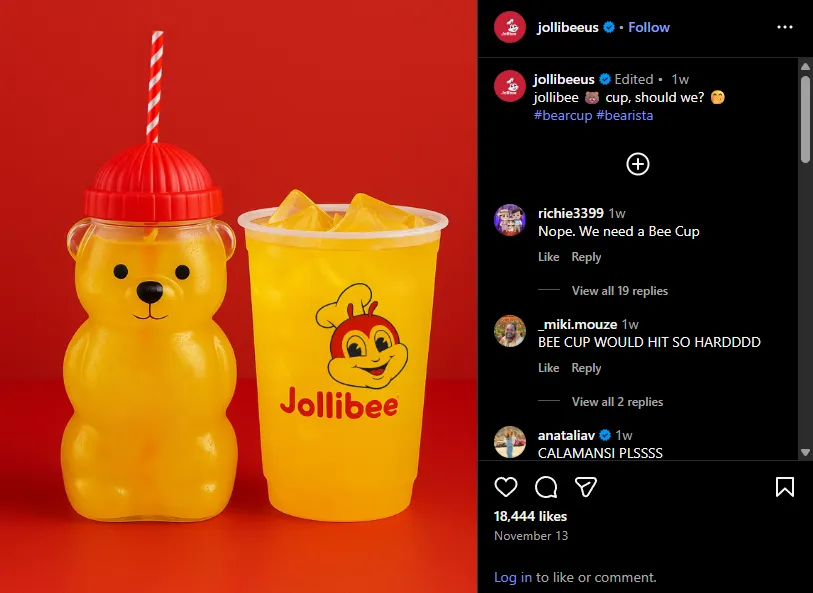
People weren’t excited. Why a bear? Why now? What does this have to do with the brand?
33% of consumers say it’s embarrassing when brands hop on trends that don’t fit because it feels like a forced grab for attention, not a move rooted in brand voice or customer insight.
Trends aren’t bad, but if they don’t align with your identity, your audience will notice. And they’ll let you know.
10. Engagement-Bait Reels With No Payoff
You know the ones.
“How I 10x’d my growth in 30 days.”
“6 ways to fix your content strategy.”
You sit through the whole reel, and then the punchline hits: “Details in caption.”
It’s infuriating. You gave them your time, and they gave you a redirect.
This isn’t clever. It’s bait. And it tells your audience you value views more than value.
These tactics work on algorithms, not people. And when they become your default content strategy, they train your audience to stop watching. Because they’ve learned they’re not going to get what they came for.
Want to build trust? Deliver the goods up front. If you’re going to promise “6 ways,” then share them.
Otherwise, you’re not growing an audience. You’re just wearing them out.
Content Marketing with JS Interactive
Cringe content is everywhere. But it doesn’t have to be part of your strategy.
At JS Interactive, we help brands create content that earns attention for the right reasons. Clear positioning. Human tone. Real insight. No gimmicks.
We combine smart SEO, story-led writing, and firsthand experience to build content people actually want to read and remember.
If you’re ready to drop the tricks and build a content engine that performs over time, we’d love to help.
Start building your marketing strategy today

Share Article


