

AI’s Impact on SEO & Digital Marketing: 12 Trend Predictions for 2026

Just being candid here – but in this AI industry, the fatigue is real. There have been numerous shifts since AI’s rise, and it continues to evolve rapidly. At times, it feels like it’s hard to keep up. Almost overwhelming. The constant hype, overreliance on AI, and the cognitive overload it can create.
As marketers, we know it’s par for the course: staying on top of the industry and its trends, and staying ahead of the curve. It’s what we do. It’s what businesses rely on us for.
With over 15 years of digital marketing experience and an early adopter of AI, I have learned that while tech will evolve, one thing always remains constant. Having a deep understanding of your audience and user behavior is the only reliable way to navigate continuous change.
Understanding AI’s Impact on User Behavior
As we’ve seen over the last year, numerous industries and data reports have indicated a significant decline in inbound website traffic. However, this doesn’t conclude that search demand has dropped.
People are still researching and comparing options; it’s just that most user interaction and engagement occur before they ever reach a website.
A prime example of this is AI Overviews (AIO), where early parts of the user journey resolve questions long before they hit a webpage.
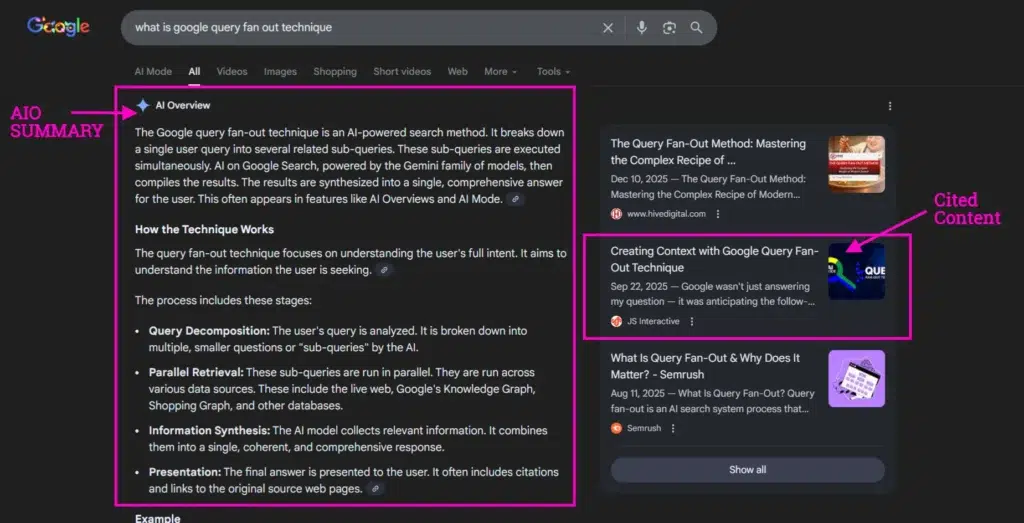
AI agents, answer engines, and zero-click results have significantly impacted how users consume information.
This behavior has forced traditional SEOs to rethink their marketing strategies to help businesses remain relevant.
Some key things noted in the last year:
- Visibility has moved into channels that standard analytics do not measure
- Brand Authority influences which websites LLMs cite.
- Content that answers questions clearly gets referred by AI, while keyword-heavy pages are more likely to be overlooked by systems.
- AI assistants influence mid- and bottom-funnel decisions, from comparisons to purchases. The funnel is tightening, and users are making choices earlier in the process.
As technology evolves and user behavior adapts, how marketers respond to this shift will make all the difference in whether or not your brand remains relevant and visible.
12 Trends for SEO and Digital Marketing in 2026
As we move into the new year, staying on top of these trends will help guide your marketing strategy in 2026.
1. Visibility Beyond Google Rankings
Search still plays a central role in how people find information, but visibility is no longer limited to Google rankings, and marketers need to think beyond site traffic.
AI tools now surface answers, summaries, and brand references that shape decisions without always sending users to a website.
While Google still commands the largest share of search-driven traffic, AI-based discovery now accounts for a meaningful share of the overall search experience.
U.S. research indicates:
- 20–35% of searches now include AI Overviews
- An additional 4–6% of searches involve AI engines like ChatGPT and Perplexity
- Combined, 25–40% of searches are now AI-influenced
Some experts have suggested that AI Overviews could eventually appear on up to 75% of keywords on large sites. And as AI answers expand, multiple studies show organic click-through rates dropping, often leading to 20–40% declines in traffic on affected queries.
From these statistics, a few implications arise…
Shifting Focus from Site Traffic to Authority & Influence
With website clicks less predictable, visibility carries more weight than raw traffic alone. Businesses need to rethink their approach and focus on additional ways to gain visibility and build brand authority.
Getting Cited by AI Engines Creates a Different Kind of Opportunity
Lower click volume does not mean lower impact. AI Overviews now reach hundreds of millions, and in some cases over a billion, users each month, placing cited brands directly in early research paths.
When a site is cited inside an AI summary, click-through rates can nearly double, rising from about 0.6% to around 1.08%, even if overall volume remains modest. In this environment, citations matter as much as rankings.
Key Success Metrics Will Evolve
As discovery spreads across AI tools and interfaces, visibility is no longer tied to a single engine or result type. Many of these interactions do not qualify as traditional sessions, so success must be measured more broadly.
By 2026, brands should reprioritize and expand performance tracking to include:
- Conversions: completed actions and revenue, not just sessions
- Referral traffic: visits from AI citations and answer interfaces
- Direct traffic: branded demand influenced by AI exposure
- Brand mentions: frequency of brand references across AI and non-AI environments
- Competitive visibility: presence in AI Overviews and chat tools
- Reviews and sentiment: trust signals that influence AI selection
- AI visibility: how often a brand appears in AI-generated answers
- Multi-touch attributions: understanding how multiple interactions contribute to a decision, not just the final click
To stay visible, brands need to show up where people begin forming opinions, not only where they complete a visit.
2. Technical SEO is a Priority for AI Visibility
While website traffic will fluctuate, business websites remain a core part of the web’s information layer and still serve as your authority engine.
AI systems continue to pull from them to answer questions, explain products, and surface reviews, even when no direct visit occurs. Where websites were once a destination goal for the end user, they’ve now become a part of a broader online infrastructure.
A website’s technical SEO now plays a larger role in helping AI agents scrape and crawl data that feeds LLMs.
As AI agents influence more discovery and referrals, websites need to be technically sound to be read and trusted by AI. If a site is hard to interpret, AI systems are less likely to rely on it, regardless of content quality.
Technical foundations that support AI visibility include:
- Crawlability and indexation to make your website eligible for AI answers.
- Structured content and Semantic HTML to help AI extract meaningful signals from your webpages.
- Structured data and Schema markup to help AI systems dramatically comprehend your website’s content.
- Core Web Vitals, including LCP, INP, and CLS, to help build trust with AI systems.
- Page speed and accessibility for clean, predictable, accessible experiences for AI systems and users.
When information is clearly defined on your website, it is easier for AI systems to interpret and reference your content in answer engines and overview panels.
3. Agentic AI for E-commerce Transactions
This recent announcement was predicted by both my colleague and me a year ago. And it’s pretty exciting to see it coming to fruition.
AI is beginning to play a direct role in how people shop.
In late 2025, PayPal and OpenAI announced a ChatGPT checkout flow that lets users complete a purchase without visiting a merchant’s site.
This changes how product discovery and conversion work. Research, comparison, and payment can now happen inside a single conversation.
Agentic ecommerce does not behave like human browsing. AI agents rely on:
- Structured product data
- Clean and complete feeds
- Accurate availability and pricing
- Consistent naming and attributes
- Information they can interpret without confusion
- High-quality images
They are not influenced by design, layout, or navigation. They surface the products they understand most confidently.
Richer product feeds and a clear schema increase the likelihood of inclusion in these recommendations.
Websites still matter, but they are no longer the only storefront. Product information must be ready for online shoppers and the AI tools that guide them. If an agent cannot recognize your offer, it cannot surface it.
As we move into 2026, this becomes one of the most significant shifts in e-commerce. Brands need to prepare for a world where the first impression and the final action can happen without a traditional site visit.
4. Brand Authority is a Requirement
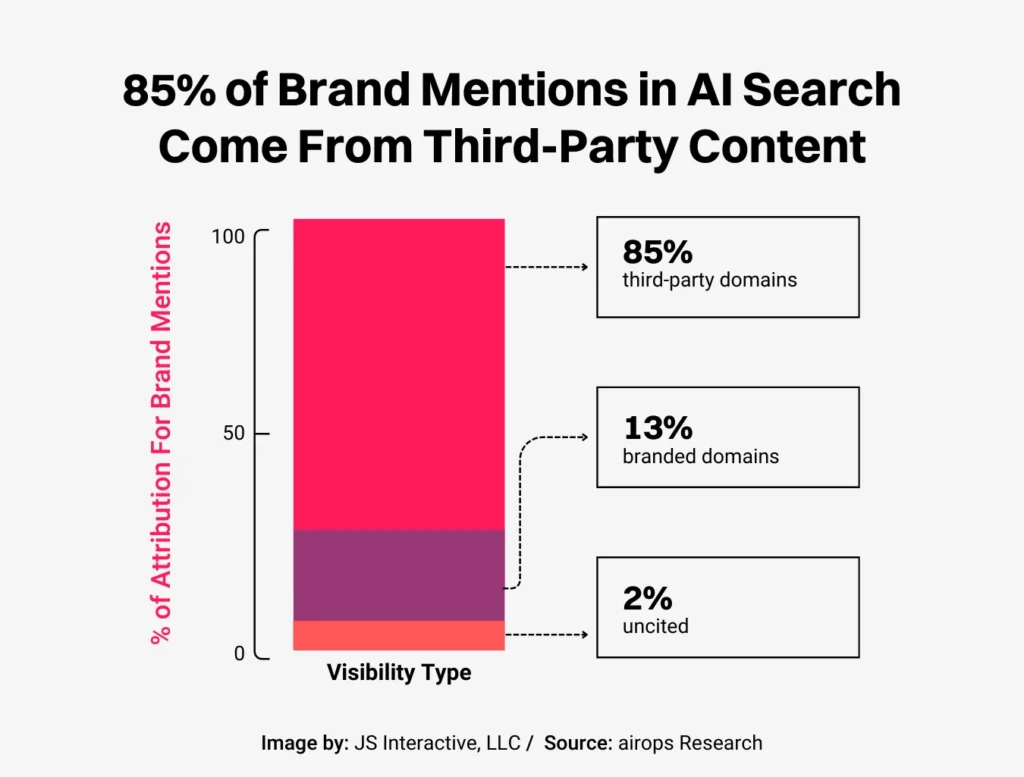
Recent studies show a clear pattern. Brands with strong reputational signals are 3 to 5 times more likely to be cited in AI Overviews than similar sites with weaker authority footprints.
When AI systems decide which sources to surface, they rely on authority signals that indicate credibility and consistency.
These signals extend beyond on-page optimization. Search systems evaluate how your brand appears across the web, looking for confirmation that your information is reliable and supported elsewhere.
We know that AI Overviews often serve as the first point of discovery.
A question is answered. A brand name appears. Sometimes there is a link that corroborates the answer.
When a user clicks through, they are looking to verify what the AI snippets already told them.
This is where authority directly affects behavior.
Users are more likely to continue exploring when they encounter familiar signals that confirm legitimacy and reinforce trust.
Signals that will strengthen brand authority include:
- Clear author or company attribution
- Visible PR, partnerships, sponsorships, and earned media
- Consistent messaging and editorial standards
- Third-party reviews and ratings
- Mentions from reputable publications
- Active presence on validation platforms like Reddit, Quora, and YouTube
- Consistent product and brand data across channels
- EEAT signals that reflect real-world expertise
These signals support both sides of the journey. They help AI systems decide which sources to surface and guide users to dig deeper.
Brands with scattered or incomplete signals face the opposite outcome. Even when AI introduces them, inconsistent or outdated information can stall engagement and stop the journey early.
By 2026, brand authority will influence not only who appears in AI responses but also whom users choose to engage with afterward.
Strong authority supports deeper exploration and higher conversion potential. Weak authority limits both visibility and follow-through.
5. A Shift From Keywords to Answers
Question-and-answer formats, supported by schema and a clear topic structure, align naturally with how answer engines parse and surface information.
Search systems no longer rely on exact phrase matching. They try to understand the topic behind a query and the intent underlying it, which is why pages built around single keywords feel less effective today.
Search in 2026 seeks deeper meaning, not repetition.
Content now needs to reflect how people have conversations around a given subject. When a page clearly covers the topic, uses natural language, and stays focused on the question, it provides search and AI systems with stronger signals to work with. If content creation and marketing are part of your cadence, consider the following.
Content Structure That Supports Answers
Guides on AI SEO consistently show that specific structural elements enhance performance.
FAQ sections, Q&A blocks, and schema markup help search engines and answer engines interpret content by outlining entities, questions, and relationships in a machine-readable format.
These cues support both rich results and eligibility for AI-driven answers, especially when each heading poses a clear question and the following paragraph delivers a direct answer.
A question-and-answer format often works well in answer engines because users typically engage with questions, and AI systems are designed to find text that reflects that structure.
By organizing content around questions like “What is…?”, “How does…?”, and “When should…?”, it becomes easier for AI to extract concise and reliable responses.
AI Search Favors Topic Understanding Over Keywords
This shift changes how content should be developed. Instead of starting with individual keywords, effective content begins with a clear understanding of the topic and the related questions someone is likely to explore.
Strong content reflects subject-level understanding. It addresses the core concept, explains supporting ideas, and anticipates natural follow-up questions.
Topic clusters help reinforce this depth by showing how related pages connect and expand on a central theme, rather than repeating similar phrases across disconnected content.
Industry forecasts increasingly describe prompts, topics, and entities as the modern equivalents of long-tail keywords. They align more closely with how people search today by asking complete questions and working through tasks rather than typing isolated terms.
What AI search systems respond to, include:
- Clear definition of the primary topic
- Consistent terminology across related content
- Obvious relationships between ideas and subtopics
- Coverage of closely related questions
- Structured cues, such as headings and schema, that clarify meaning
The goal is not to rank for every variation of a keyword. It is to demonstrate a complete understanding of the topic.
When search systems recognize that depth and clarity, they can match content to a broader range of queries without relying on keyword density.
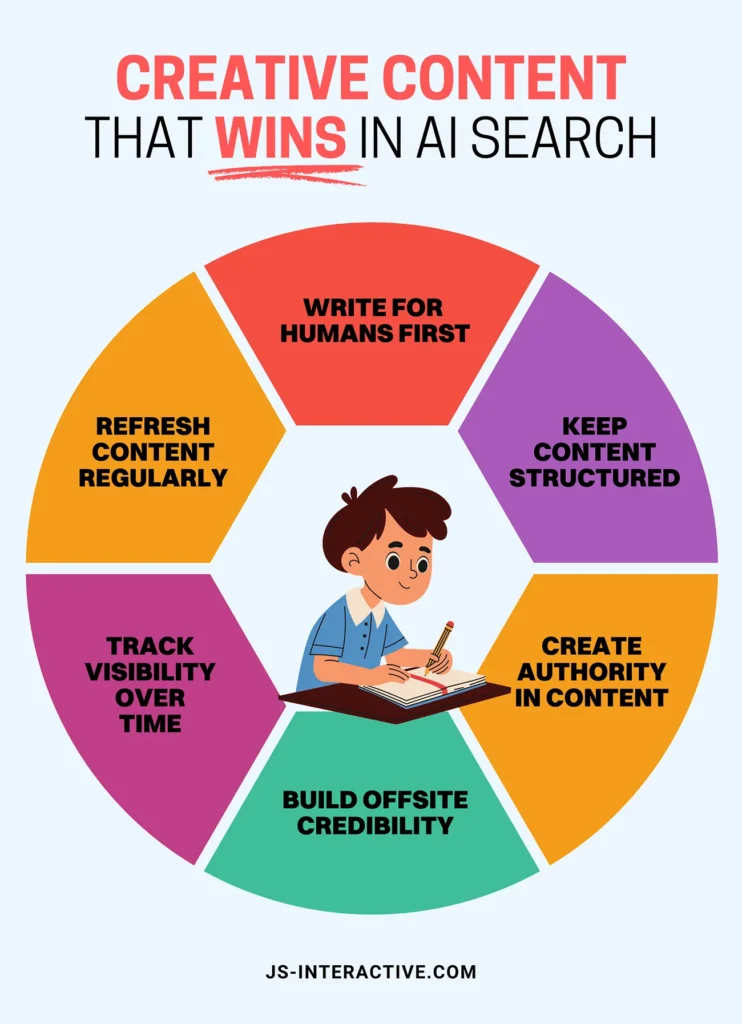
6. Content for Humans — and Machines
Ok, so let’s get something clear. Human-first content is our focus. Our content creation must be hyper-relevant and tailored to help online users. However, my theory has always been this: if we are going to create content, we may as well take the time to ensure search systems notice your efforts.
Let’s face it. Content now has to work in two directions.
It needs to feel real and helpful to people. It needs to be organized in a way modern search systems can understand.
When both sides come together, content is easier to trust and easier to surface.
Content for Humans – First
AI-generated content has created a large volume of repetitive material online.
About 42% of marketers use AI tools, and teams that do often publish far more content than those that do not. The result is a growing number of pages that cover the same topics in the same way, with little distinction or practical depth.
Human-first content that stands out from AI noise is:
- Grounded in real expertise
- Offers unique value through personal experiences and stories
- Reflects current conditions
- Addresses evolving questions
- Provides up-to-date context rather than static explanations or outdated examples
- Remains hyper-relevant, informative, and aligns with the current needs of the intended audience
- Includes conversational language that shifts to match how people talk about their problems today
This approach keeps content accurate and specific rather than generic. It captures lived experiences, practical insights, and genuine data from real-world sources. It explains the topic clearly and gives someone enough direction to move forward.
Once content resonates with people, structure determines how far it travels.
Structured Content for Machines
AI relies heavily on structure and, as a result, is more technical.
When a page is organized, both people and systems can navigate it more easily. Some considerations to include:
- Clear headings, consistent terminology, schema markup, and predictable formatting to help search systems understand what a page covers and how its information fits together.
- Short, focused paragraphs that address one idea at a time make content easier to scan on any device and easier for AI systems to extract relevant passages.
- TL;DR summaries or quick-answer sections near the top of a page to provide AI Overviews with an immediate snapshot of the content.
- A concise conclusion at the end of an article to reinforce the main takeaways and help both readers and answer engines understand what matters most.
By structuring pages, you enable search systems to match content to a broader range of queries and to treat it as a reliable source for rich results and AI-driven summaries.
Without clear segmentation, even strong insights can be overlooked because the system cannot interpret or reuse the information with confidence.
Structure also requires ongoing attention.
Pages that are revisited over time stay clearer and more aligned with current needs. Updating data, refining sections, tightening language, and replacing outdated examples help keep content readable and relevant.
By 2026, the strongest pages will do both. They will communicate clearly with stakeholders and organize information so search systems can quickly understand and surface it.
7. YouTube and Reddit Become Core Discovery Channels
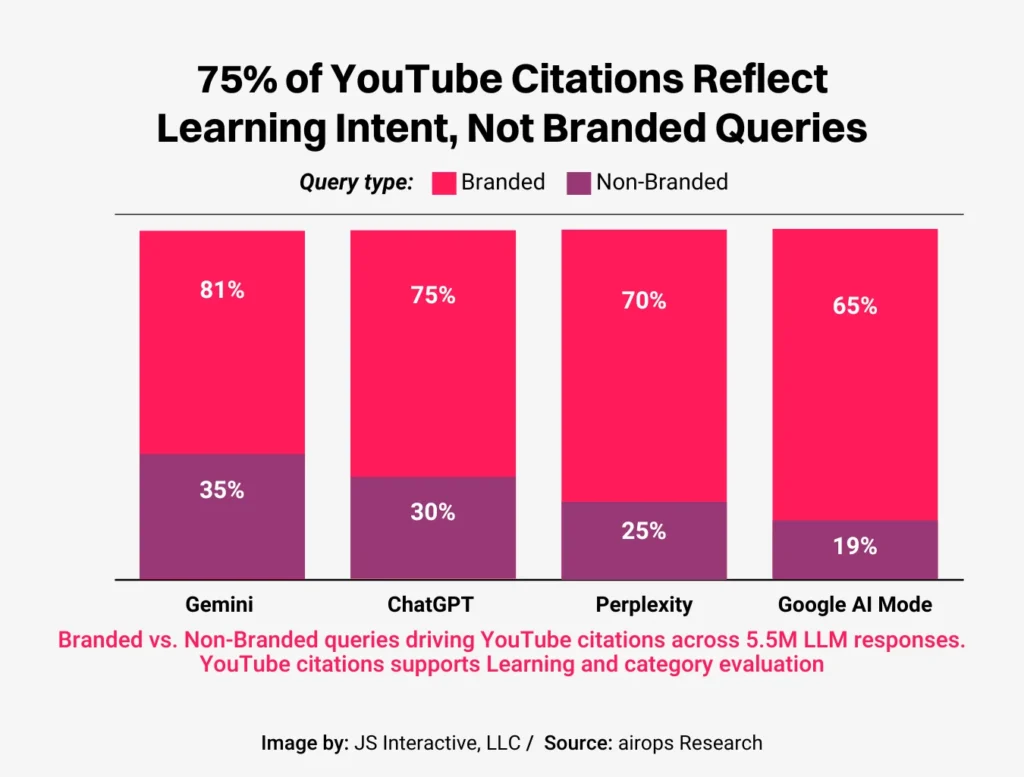
User‑generated content (UGC) platforms are increasingly shaping how AI‑driven search selects and cites information. YouTube’s popularity continues to increase significantly, while platforms like Reddit are a go-to for explanations, reviews, and authentic experiences.
YouTube is a top global site for high-intent, learning-focused queries, especially how-tos and middle-of-funnel evaluations, and it often appears in AI-generated responses. Clear titles, accurate descriptions, and chapter marks enhance video discoverability across both ranking systems and AI tools, making it easier for AI search to lift the right segments into answer experiences.
Reddit has also become a primary source of signals. Recent analyses show:
- SearchGPT references Reddit in 12.6% of answers, usually later in the response.
- Perplexity includes Reddit in 3.5% of answers, but the links appear much earlier at an average position of 3.
- Google AI Mode uses Reddit in about 9% of responses, typically in the mid- to late sections of the text.
These patterns highlight how AI systems use Reddit for nuance, context, and real-world detail.
For brands, this shift creates new entry points. Helpful YouTube videos and genuine participation in relevant Reddit discussions help strengthen visibility across both traditional search and AI-driven experiences.
But don’t stop there. Other platforms include Quora, LinkedIn, and Substack, among others.
8. Paid and Organic Search Blend Together Inside AI-driven Search Interfaces
Paid and organic now compete for attention within the same AI-driven panels, which is changing how clicks, conversions, and optimization should be managed.
As AI Overviews expand, the priority shifts from pure traffic generation to converting a smaller pool of visitors and learning from the prompts that drive AI-driven ads.
AI-driven search is changing where ads and organic links appear. In 2025, multiple tests showed that ads were placed directly within Google’s AI Overviews, confirming that paid units are being blended into answer modules rather than appearing only above or below them.
Placement is also inconsistent. AI Overview panels can appear above, between, or below ads and organic results, making attention harder to predict and reducing direct control over visibility.
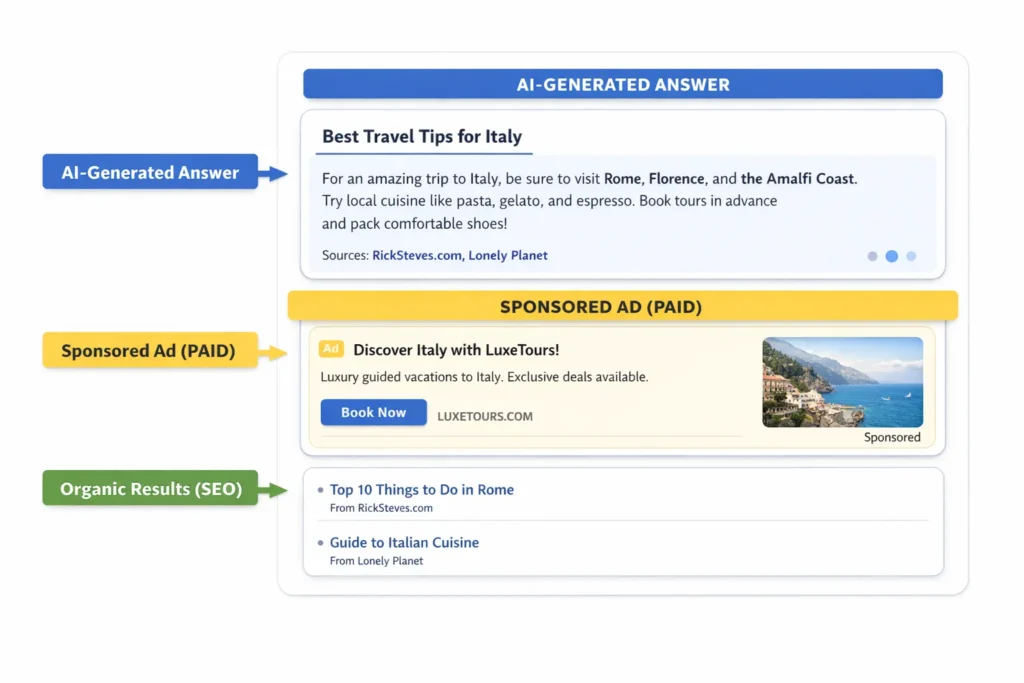
The performance impact is measurable. Studies show that when AI Overviews appear, organic click-through rates (CTRs) drop by about 61%, and paid CTRs drop by about 68% on affected queries.
These declines reflect a shift in user focus away from links and ads toward the AI panel itself, even when those elements remain on the page.
Conversion Rate Optimization (CRO) is Critical
With clicks and impressions under pressure, conversion rate optimization (CRO) moves from “nice to have” to critical.
If traffic is flat or declining, improving the conversion rate on each visit is the primary lever for protecting the pipeline and revenue. Teams will need to put more emphasis on:
- Strong offers and landing-page experiences for the clicks that do come through.
- Clear paths to lead capture and purchase, especially on high-intent pages.
- Test copy, layout, and forms to lift conversion rates rather than chasing incremental impressions.
Paid and organic cannot be treated as separate tracks. Both influence how often a brand appears in AI surfaces, and both shape how users encounter information during a search.
As ads integrate into agents and conversational flows, digital marketers can gain insights into the prompts and intents behind placements, creating a valuable data source for messaging, content strategy, and CRO experiments.
As AI-driven overviews, conversational ads, and commerce-ready agents continue to merge, budget planning will center on a single goal: profitable conversions across AI and search, not just more clicks.
9. User Journeys get Tracked With Multi-Touch Attribution
Most buying journeys no longer follow a straight line. People move between AI tools, social platforms, ads, email, and search before they ever land on a website. Many of those interactions never show up as clear sessions in GA4.
AI assistants, social feeds, and marketplaces often influence decisions early. By the time someone clicks through to a site, they are usually confirming a choice, not starting one. Traditional analytics only capture part of that story.
This is why teams are moving toward multi-touch attribution. Instead of relying on a last click, they connect to all-purpose MTA platforms like UserMaven, Customer Relationship Management (CRM) data, ad platforms, and offline activity to understand how interest builds over time.
Most buying journeys do not happen in one place. And the length of that journey varies. Some purchases happen quickly. Others take months.
Many journeys now involve 6–8+ meaningful touchpoints before a sale, and B2B deals can require dozens of interactions across roughly 3–4 channels over 200+ days.
Why Clear, Multi-Channel Reporting Matters
Businesses have a clearer understanding of how their marketing efforts are working when they understand how different touchpoints work together.
Seeing first touch, last touch, and everything in between gives teams a clearer picture of what influenced the outcome.
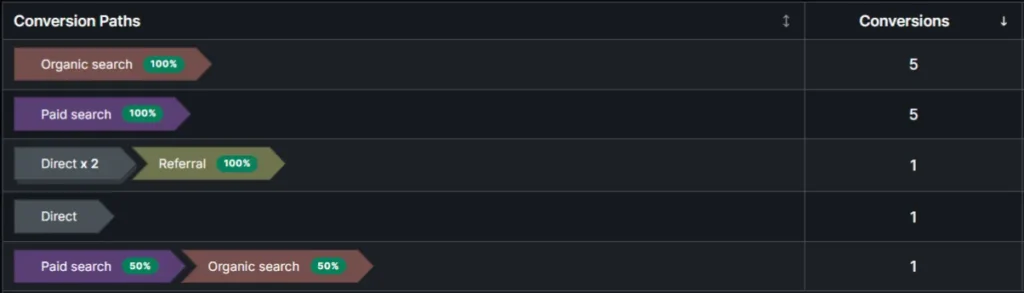
When reporting reflects the whole journey, teams can see which channels drive awareness, which reinforce trust, and which tend to close. That makes it easier to evaluate effectiveness and adjust strategy with confidence.
This does not mean being everywhere at once. It means being present on the platforms your audience engages with, and understanding how each one contributes across the journey.
Strategy is grounded in how people actually move from interest to action. As reporting improves, so does alignment. Clients gain a clearer view of what drives results, and marketers can explain performance with greater confidence.
10. The Rise in AI Avatars
I hate to say this, but we can expect to see more AI-generated brand avatars in 2026 as video and voice tools mature. AI Avatars will become more common in support, training, and educational content.
These avatars are likely to appear within AI surfaces, directly connecting their scripts to your knowledge base and content strategy.
They should be considered part of your Experience, Expertise, Authoritativeness, and Trust (EEAT) strategy. This means clear disclosure, accurate information, and alignment with your brand voice, policies, and editorial standards.
Weighing the Risk of AI Avatars
We personally don’t use AI avatars. Since brand sentiment is essential to us, we have weighed the risk of synthetic presenters eroding trust, especially in environments where audiences already question what is real.
However, this may change.
For the time being, it’s important to note that low-effort avatar content on platforms like YouTube can be flagged as spam and may violate updated rules against inauthentic or repetitive content.
Key considerations for AI avatar use in your content strategy
- For teams that experiment, the same standards that apply to human spokespeople apply with AI avatars: clarity, accuracy, originality, and accountability.
- High-quality scripting, honest insight, and transparent disclosure help distinguish applicable AI-presented content from low-value automation that audiences and platforms are increasingly inclined to ignore.
My point is this. Using an AI avatar should be a deliberate choice; it will make sense for some brands and audiences and not for others.
11. Automation Will Accelerate Behind the Scenes
AI is now automating more than content. It is driving experimentation, bid strategies, personalization, and creative testing across paid and owned channels.
What once felt experimental has become standard practice in many marketing and analytics workflows.
This shifts the marketer’s role. Instead of manually managing campaign levers, teams will focus on guiding automated systems with clear objectives, guardrails, and measurement.
The advantage goes to teams that combine automation with strong attribution and human oversight. They will move faster, test more effectively, and maintain strategic control as these systems become more common in 2026.
What I recommend as a good starting point for businesses is to think at a high level about your existing workflow. Then, adopt AI systems within your existing workflow to improve efficiency. Don’t just pursue the next shiny new tool. Instead, acquire technology tailored to your specific business requirements.
12. Consolidating AI Tools Around What Businesses Need
Thousands of AI tools have been built in the last year alone. As I previously mentioned, the fatigue is real. I believe that only the most useful, outcomes-focused tools will thrive in 2026; others will stagnate, merge, or disappear.
Digital marketers are gravitating toward platforms that both track how AI represents their brand and tie that visibility to real business results.
The AI tools that win over the next few years will:
- Combine SEO, paid, content, and AI search workflows in a single environment.
- Report across Google, AI Overviews, and major AI assistants in one view.
- Track AI-specific signals, such as citations, answer positions, and prompt coverage.
- Connect AI visibility to qualified leads, pipeline, and revenue.
- Reduce manual exports by integrating CRM, ad platforms, and analytics.
Suites like Semrush One already move in this direction, blending traditional SEO, paid, and AI search insights into a unified workspace.
Newer platforms, such as Profound, focus on generative and answer-engine visibility, showing where and how AI systems mention brands and competitors.
As clearer winners emerge, AI strategy shifts from juggling dozens of tools to building around a smaller, integrated stack.
The platforms that survive will be those that move marketers beyond surface-level visibility into data that consistently improves outcomes across both search and AI surfaces.
Looking Ahead to 2026 with JS Interactive
Search and discovery are shifting, but brands that stay clear, trusted, and genuinely helpful will remain visible across both traditional results and AI-driven experiences.
Influence now happens earlier in the journey. People rely on AI tools and agents long before they reach a website, and those moments shape how decisions get made.
JS Interactive helps clients understand their current visibility, adapt content and data for AI retrieval, and build practical roadmaps for 2026 without chasing every trend.
Contact us today to see where your visibility stands.

Share Article


