

AI Search and Local SEO: How Google Business Profiles Influence Visibility

We’ve seen an influx of new inquiries this year seeking help with visibility, and one pattern keeps emerging.
Many businesses neglect their Google Business Profile.
Some have outdated service info or missing hours.
Others haven’t added photos in years.
A few don’t even realize that customers are posting public questions on their profiles that go unanswered.
The problem isn’t always the website or its content. It’s that Google’s AI now relies heavily on GBP data to shape local search results.
When this data is incomplete or out of date, your business gets pushed aside in favor of one that looks more current and complete.
We’re seeing it across industries. If your profile gives Google what it needs, you earn visibility. If it doesn’t, AI fills the gap with a competitor who took the time to get it right.
So what exactly is AI pulling from your Business Profile, and why does it matter so much for local search?
The AI Local Search Connection: How Google Uses Business Profiles
As Google leans more on AI to answer local queries, it’s relying heavily on the data inside your Business Profile.
When someone searches for a nearby service, like “coffee shop open now” or “affordable dentist in Austin,” on Google, the AI is often summarizing information from Business Profiles. It uses your business hours, service categories, reviews, and photos to generate quick, accurate answers.
Even with a well-positioned website, your Google Business Profile data plays a bigger role in determining whether you appear in local results powered by AI.
This is especially true for discovery searches. Statistics show that 86% of all Google Business Profile views come from unbranded, category-based searches, not from people typing in your business name.
This means most users are searching for what you do, not who you are.
If your profile doesn’t clearly reflect your services, location, and reputation, you’re likely to get skipped.
Why Optimizing Your Google Business Profile Drives Better Local Rankings
We all know that Google Business Profile plays a significant role in whether you show up in the map pack.
Now, with AI, Google also decides whether to feature your business in local search results.
Local ranking is no longer just about proximity or backlinks. Google looks at how complete, consistent, and up-to-date your profile is.
Businesses that maintain detailed profiles are more likely to appear in AI Mode and top search placements, even if their websites are average or their review volume is lower.
The difference is measurable. Businesses in the top 3 local pack spots typically see:
- 126% more traffic
- 93% more profile actions (calls, clicks, direction requests)
These aren’t just impressions. They translate into customer activity.
When your profile is fully filled out, regularly updated, and aligned with what people are searching for, Google is more likely to show it. It signals that your business is active, accurate, and worth recommending.
What Google’s AI Looks for in Trusted Local Brands
Google’s AI doesn’t just want the best match. It wants a trustworthy one.
We’re seeing a clear pattern across industries.
The businesses that get the most visibility aren’t always the biggest or those with the most reviews. They are the ones that appear active, consistent, and credible.
Some of the key trust signals Google’s AI looks for include:
- Consistent business hours that match across your profile, website, and citations
- Recent reviews that reflect ongoing customer activity
- Photos and videos that show the business is current and operational
- Verified and complete profile fields, including services, location details, and contact info
Research shows that customers are 2.7 times more likely to consider a business reputable when its profile is complete. This kind of trust translates directly into visibility.
Where AI and Local SEO Meet: 5 Steps to Improve Your Google Business Profile
Google’s AI relies on structured, trustworthy data to serve accurate results to searchers, and that includes the information on your Google Business Profile.
You must take the time to complete every field your profile prompts during setup, even if they seem insignificant in the moment. Providing details such as service options, accessibility, and Wi-Fi availability helps Google better understand your business.
The more structured and complete your profile is, the more confidently AI can surface it in local search.
Here are five key areas to focus on:
1. Select Categories
Choosing the right primary category is one of the most important ranking signals in your Google Business Profile. It tells the search engine what your business does and determines which search terms you’re eligible to show up for.
This isn’t the time to be broad or generic. Be specific and accurate. If you’re an attorney, don’t stop there. Instead, choose “Family Law” or “Divorce Attorney” if that’s your focus. Think of categories as your eligibility filter.
If your primary category doesn’t match the kind of problems people are actually trying to solve, such as “emergency repairs,” “same-day appointments,” or “cosmetic upgrades,” Google has a harder time justifying you as the right answer in AI-driven results. The closer your category matches the intent of the search, the more likely Google’s AI is to include you in the results.
To stay aligned with search demand, use categories that reflect your actual use cases, not just a broad industry label:
- Use your primary category for your main service
- Use secondary categories for your other core services
- Choose options that match how people describe their need, such as “emergency dental service” or “same day repair,” rather than broad, generic labels
For example, a dentist can move beyond “Dentist” as the only category and add “Emergency dental service” as a secondary category in the Business Profile. That makes it easier for Google to match the profile to searches from people who need urgent care, not just routine cleanings.
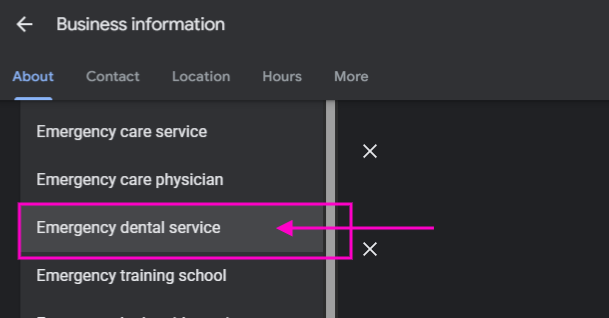
You should then add secondary categories that accurately reflect what your business offers. These help Google understand your full range of services and improve visibility for related searches.
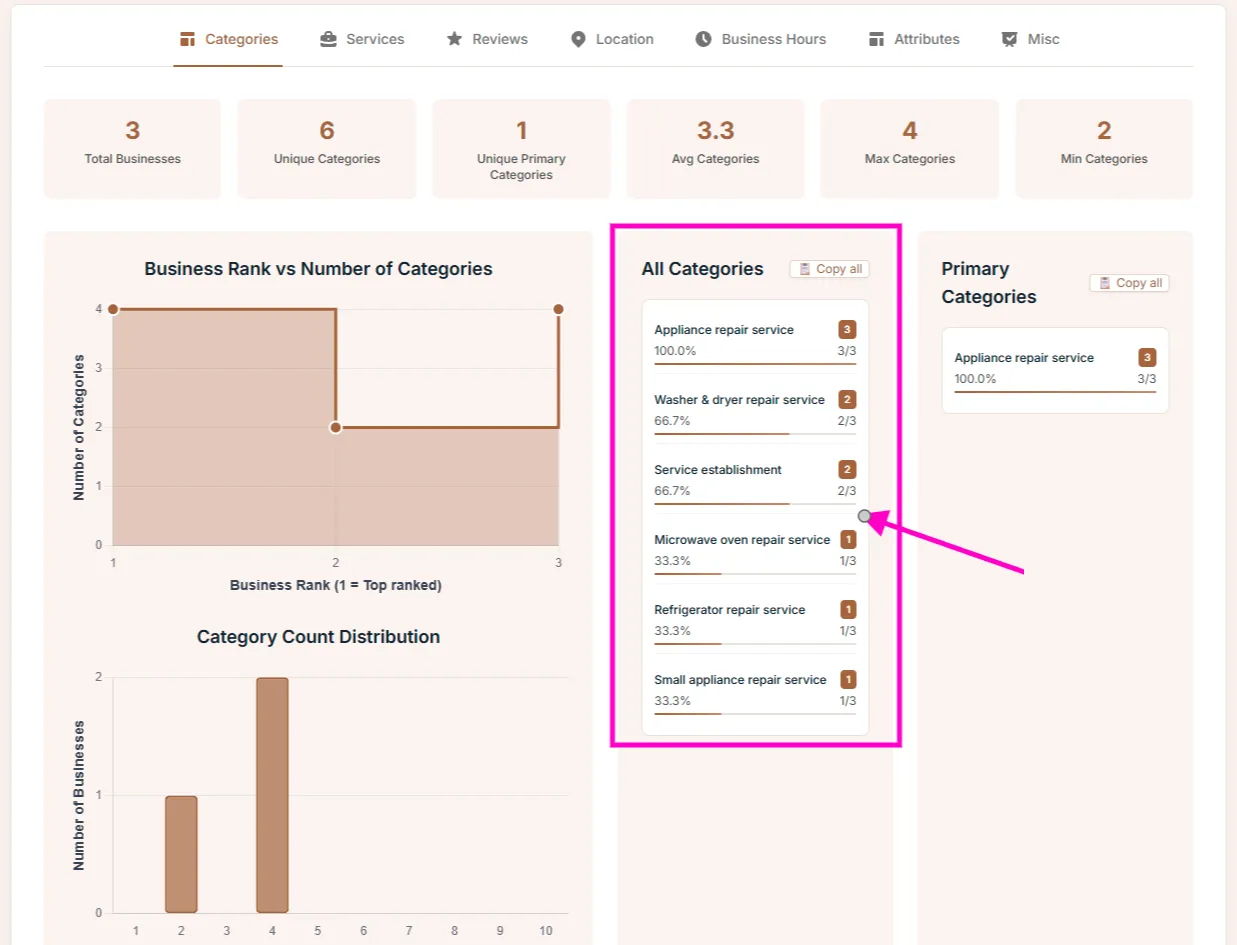
If you’re not sure which categories to choose, tools like BrightLocal and GMB Everywhere can help you audit competitor profiles and identify what’s working in your industry.
The right category is how you get matched to the right customer. And in local SEO, relevance always beats reach.
2. Add Descriptions
Descriptions give Google the language it needs to understand and promote your business. They also help potential customers decide if you’re the right fit.
Start with a clear company description. This should tell people what your business does and who it serves. Keep it short and easy to read, but specific enough to stand out.
Strong company descriptions typically include:
- A plain-language summary of what you do
- Your target customer or industry
- References to your geographic area (city, neighborhood, or region)
- A few keywords people might search for
Then write a service description for each offering listed in your profile. These should be unique, localized, and free of marketing fluff. Google is looking for clarity, not slogans.
Your service descriptions should include:
- A clear explanation of what the service includes
- City or location references (especially if you serve multiple areas)
- Simple, specific language that mirrors how customers search
- Details that distinguish this service from others you offer
You can also work in the same phrases customers use when they talk about you. A coffee shop, for example, might highlight “coffee shop with fast WiFi,” “outdoor seating,” or “pet friendly patio” in its services and description fields so Google understands who that location is ideal for.
These descriptions often appear directly in local results and give people a fast snapshot of what you actually handle. If your descriptions are vague or copied from your website, Google is less likely to feature your business. When they are clear and specific, they give both searchers and AI the information they need and make it easier to see which jobs you are the best fit for.
A line like “Same day panel upgrade for Denver homes with outdated or overloaded electrical panels” tells Google much more than “panel services,” because it includes the service type, urgency, and service area in one place.
3. Build Reviews
Reviews tell Google that your business is active and that people are engaging with it.
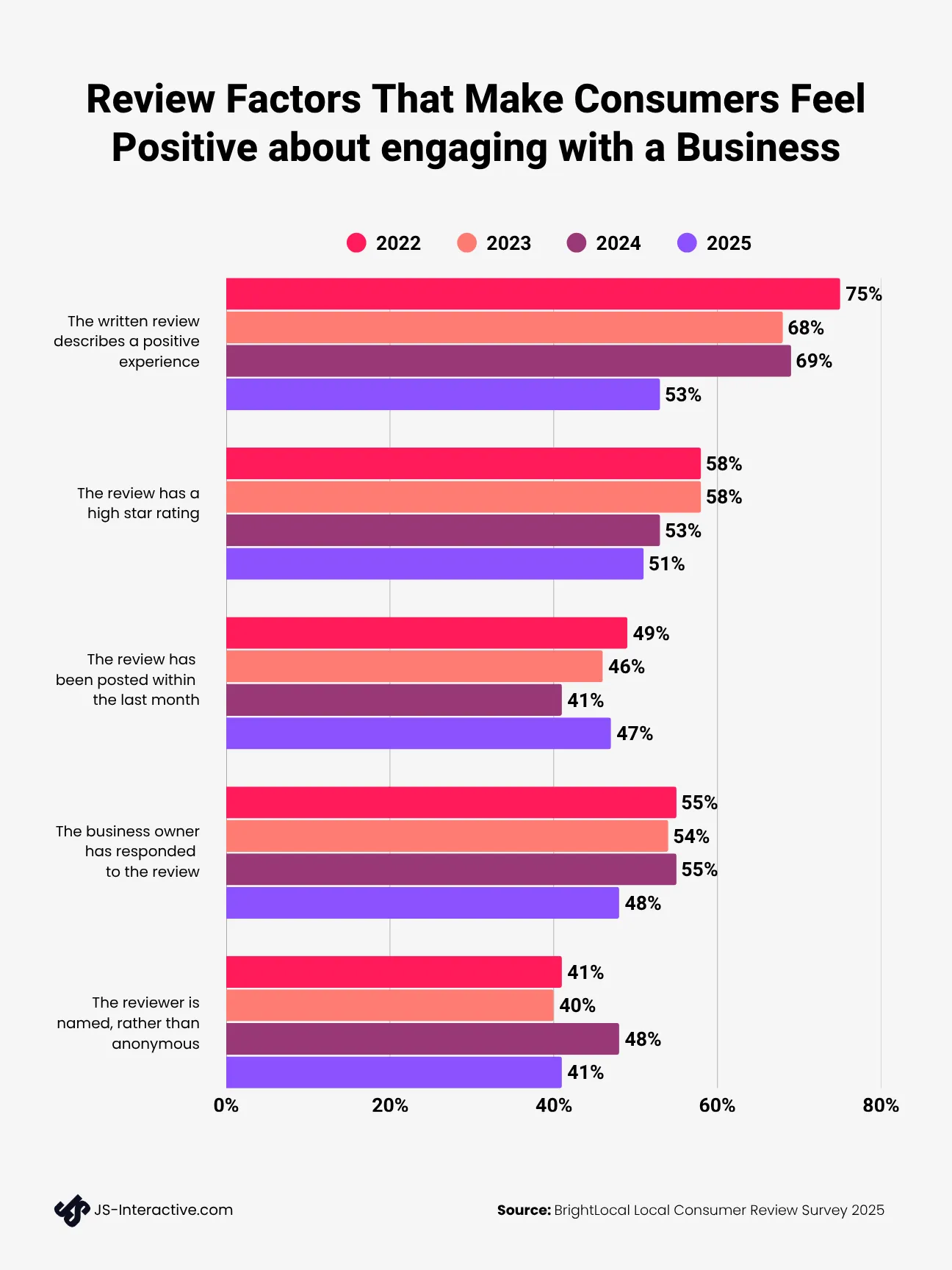
Reviews also shape how customers perceive your reputation before they ever click on your site. Google’s AI considers both the quantity and quality of reviews when determining how prominently your profile appears.
Make it part of your process to ask happy customers for reviews. Then reply to each one, even the negative ones. This shows that you’re engaged, responsive, and still in business. After all, 46% of consumers say they’re more likely to use a company that responds to all reviews.
A high volume of recent reviews is helpful, but steady activity matters more than bursts. One review every week tells Google a lot more than twenty all at once from three months ago.
Encourage Reviews Highlighting Specifics About Your Service
Google’s AI reads the text of your reviews to identify specific themes and attributes, such as “good with nervous patients,” “great for last-minute appointments,” “fast WiFi,” “quiet place to work,” or “patient with kids.” Those phrases become powerful intent signals that help you surface for more detailed searches.
You do not need to script reviews, but you can guide them. When you ask for feedback, add a simple line like:
“If it helps, you can mention what you came in for and what stood out, such as speed, friendliness, or a specific service we helped you with.”
The more concrete and honest the review, the easier it is for both people and Google to understand when you are the right fit.
4. Citations and Backlinks
Citations are mentions of your business across directories, apps, and trusted local platforms.
These listings help verify your business information and provide Google with additional signals (context) that your brand is legitimate and consistent.
Start with high-trust platforms like:
- Apple Business Connect
- Bing Places
- Yelp
- Relevant niche directories and local publications
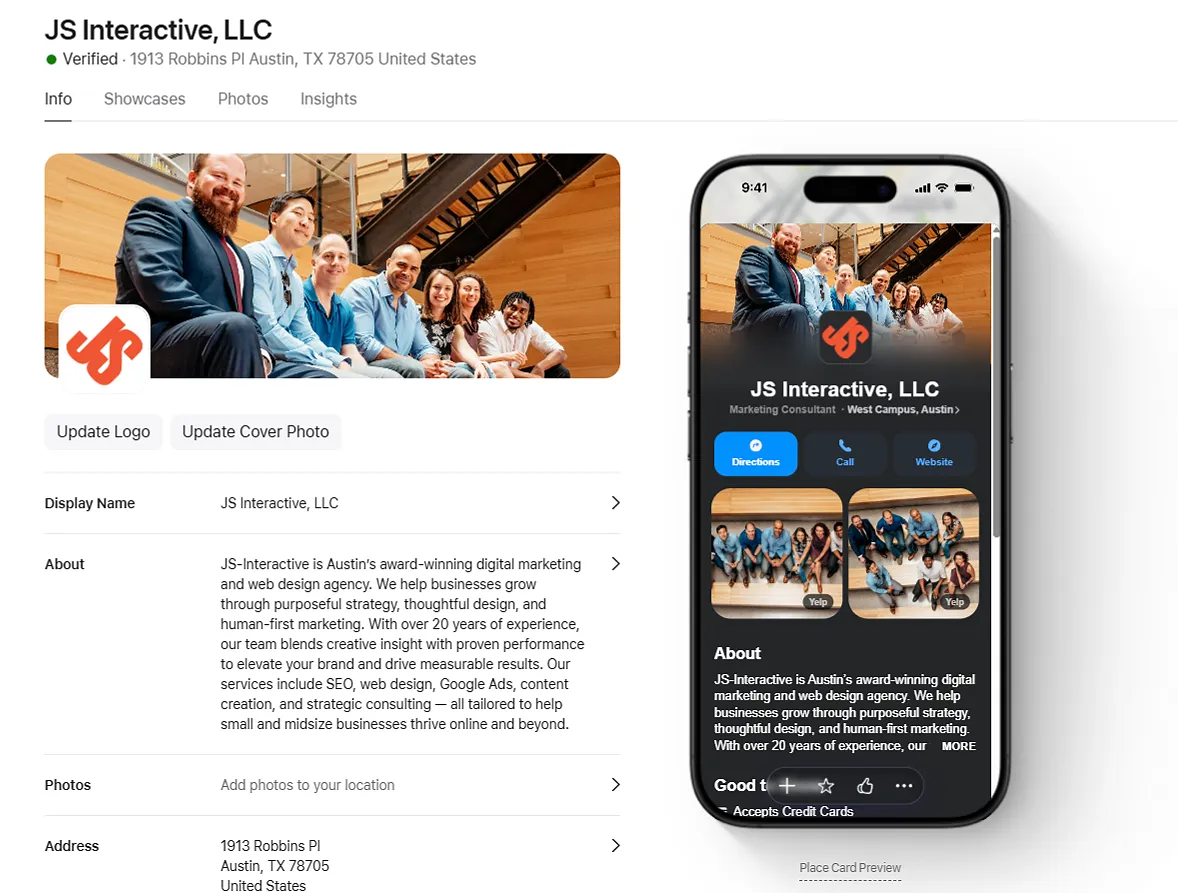
Source: Apple Business Connect
Make sure your business name, address, and phone number (NAP) are exactly the same across all listings. Even minor inconsistencies in your NAP information can create confusion and weaken your local visibility.
Citations also work hand in hand with backlinks. Links from reputable local sites or media outlets not only drive traffic but also help establish your authority in the eyes of Google’s AI. Focus on accuracy, quality, and relevance over quantity.
Together, citations and backlinks help reinforce your business’s credibility and support your overall presence in local search.
5. Add Photos and Videos
Updated photos and videos show that your business is active, visually trustworthy, and paying attention to detail. Google’s AI favors profiles that are fresh, well-maintained, and visually complete.
Profiles with rich media also see higher user engagement. Listings with photos receive 42% more direction requests and 35% more website clicks than listings without photos.
You don’t need hundreds of photos, but you should have enough to give a complete picture of your business. Profiles with at least 15 photos see higher engagement across clicks, calls, and direction taps than those with fewer images.
Aim for a mix of photos that show your storefront, team, products, services, and real customer experiences. Aim for a mix of photos that show your storefront, team, products, services, and real customer experiences.
A bright waiting room with toys and kids’ books signals a family-friendly space, while a quiet space with laptops on tables signals a good spot for remote work.
Short videos can do the same thing by showing what it feels like to visit you. When your visuals align with your ideal customers and the language in your profile, you make it easier for Google to confidently recommend you to the right people.
Keep Your Google Business Profile Fresh
A well-optimized profile is only effective if it stays current. Google’s AI looks for profile completeness and consistent activity.
Outdated information can cost you visibility. If your hours change seasonally or you add new services or photos, make sure your profile reflects those updates. Profiles that appear inactive are more likely to be passed over in favor of businesses that show signs of life.
Think of your profile as a living part of your local SEO strategy, not a one-time setup.
A simple cadence is enough:
- Update business hours and key attributes at least once a quarter, especially around holidays
- Add 3 to 5 new photos each month that reflect real customers, staff, and current offerings
- Refresh service and business descriptions when your offerings change
- Post at least one meaningful update per month, such as a special event, company news, or seasonal promotion
- Monitor and respond to new reviews as they come in
Regular updates send a clear signal that your business is open, accurate, and actively serving customers right now, which is exactly what Google wants when it chooses who to surface in local and AI-assisted results.
Let Your Website Support What Your Profile Promises
Your Business Profile should answer the four quick questions: 1) who you are, 2) where you are, 3) when you are open, and 4) what problems you solve. Your website backs that up with the information people and Google look for. This includes:
- Detailed service pages
- Pricing context
- FAQs
- Proof you can deliver
Make sure the services, locations, and language in your profile match what visitors see when they click through. If your profile highlights “emergency AC repair in Round Rock,” your site should have a clear page or section dedicated to that exact service in that area. This consistency helps Google trust your profile data and keeps visitors from bouncing when they want more detail.
Strengthen Your Local SEO with JS Interactive
Google’s AI now relies on your Business Profile to shape local search results. A complete, up-to-date profile helps you show up more often and earn trust faster.
If you’re ready to take local SEO seriously, we can help.
Our team works with clients to build, manage, and maintain active Google Business Profiles that keep your business visible.
Contact our team today to build a stronger presence and make your Business Profile work harder for you.

Share Article


